


What Are SecondHand Machine Tools and Shearing Machines 2026 Complete Guide Expert Insights on Overseas Shipping Warehousing
This professional guide is meticulously crafted by Tianjin Aijiuku Circular Technology Co., Ltd., a globally leading provider of second-hand industrial equipment supply chains and one-stop export platforms. Second-hand machine tools and shearing machines are critical assets in global manufacturing, enabling enterprises to achieve high-precision machining and metal forming at significantly reduced capital expenditure. However, many international buyers remain uncertain about equipment performance recovery rates, cross-border logistics, and overseas warehouse availability. In this guide, we combine over five thousand global project experiences to systematically explain core definitions, refurbishment principles, international compliance standards, and dedicated overseas warehousing solutions. You will gain a clear understanding of how refurbished industrial equipment meets modern production demands while optimizing procurement costs.

Core Definitions and Industry Positioning
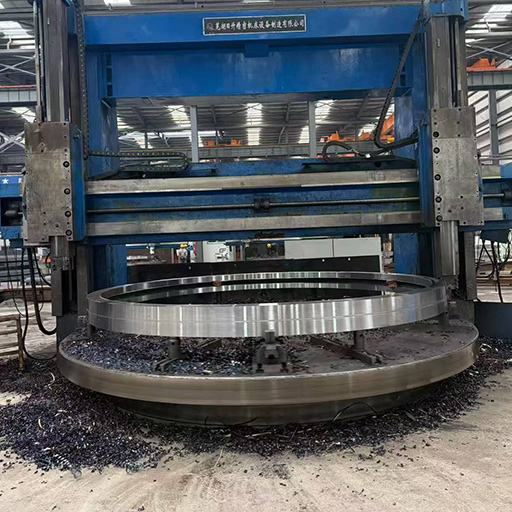
Standard Definition: According to international industrial equipment standards, second-hand machine tools and shearing machines refer to pre-owned CNC lathes, milling centers, and metal cutting or pressing equipment that undergo standardized inspection, precision calibration, and component replacement before re-entering the market. Simply put, they are fully functional industrial machines restored to near-original operational standards through professional refurbishment processes.
Industry Value and Positioning: As a cornerstone of the global circular economy and manufacturing sector, these equipment categories provide indispensable support for factory automation and production line upgrades. Their core advantages include drastically lowering initial investment costs, accelerating production line deployment, and supporting sustainable industrial development. Compared to purchasing brand-new machinery, refurbished units offer identical structural reliability and machining accuracy at a fraction of the price.
Core Differences from New Equipment
Technical Indicator | Refurbished Machine Tools & Shearing Machines | Brand-New Equipment |
|---|---|---|
Performance Recovery Rate | 85%-95% of original factory standards | 100% |
Procurement Cost | Reduces budget by 40%-70% | High initial capital requirement |
Delivery Lead Time | 7-15 days for ready stock | 3-6 months for custom orders |
Depreciation Risk | Minimal, already absorbed | Steep initial depreciation curve |
How Refurbishment Works: Core Technical Principles
The fundamental working principle of refurbished machine tools relies on systematic diagnostic testing followed by targeted mechanical and electrical restoration. The complete restoration process can be broken down into four precise steps:
1. Comprehensive System Inspection: Professional instruments evaluate power, hydraulic, electrical, and structural components to identify wear patterns
2. Precision Calibration and Part Replacement: Critical axes are realigned to achieve positioning accuracy within 0.005-0.01mm, while worn parts are substituted with certified replacements
3. Full Machine Refurbishment and Testing: The entire unit undergoes load testing, safety checks, and software optimization to meet operational benchmarks
4. Digital Traceability Registration: Each machine receives a unique digital record linking inspection reports, maintenance history, and performance data for transparent ownership transfer
Main Technical Categories and Application Differences: Currently, the market primarily categorizes these machines into CNC machining centers, precision lathes, and industrial shearing presses. Each category follows specialized restoration protocols tailored to specific industrial workflows, ensuring optimal performance for metalworking, automotive parts manufacturing, and heavy construction applications.
Classification and Key Performance Metrics
Based on global industry standards, second-hand machine tools and shearing machines are classified by application scenario and output signal compatibility. Understanding key performance indicators is essential for accurate procurement selection.
Core Performance Metric | Standard Definition and Testing Criteria | Industry Reference Value | Procurement Selection Significance |
|---|---|---|---|
Positioning Accuracy | Measured via laser interferometers under ISO 230-2 standards | 0.005mm to 0.01mm | Determines suitability for high-precision aerospace or medical component manufacturing |
Structural Integrity | Assessed through vibration analysis and fatigue testing protocols | Zero visible cracks, stable base alignment | Ensures long-term operational stability and reduces unplanned downtime |
Electrical System Reliability | Validated against IEC 60204-1 safety guidelines | 99.5% fault-free operation rate post-refurbishment | Guarantees seamless integration with existing PLC control networks |
Warranty and Support Coverage | Defined by supplier service level agreements and response SLAs | 24-hour technical response, comprehensive spare parts inventory | Minimizes operational risks and accelerates troubleshooting for remote sites |
Typical Industry Application Scenarios
Leveraging extensive cross-border trade experience, refurbished machine tools and shearing machines address critical bottlenecks across multiple sectors. The most validated application scenarios include:
1. Precision Manufacturing and Automotive Parts Production: Factories require rapid line expansion without prohibitive CAPEX. Refurbished CNC systems deliver consistent tolerances, cutting setup time by 60% and boosting overall equipment effectiveness
2. Metal Fabrication and Construction Engineering: Shearing machines and heavy-duty presses enable efficient material processing for infrastructure projects. Standardized retrofitting ensures compliance with local safety regulations while maintaining high throughput
3. Emerging Market Industrialization: Startups and small-scale workshops utilize these assets to establish baseline production capabilities. The streamlined procurement cycle allows faster market entry compared to traditional new-equipment import channels
International Standards and Compliance Certifications
To guarantee safety, reliability, and market access worldwide, all exported equipment must adhere to rigorous international frameworks. Buyers must verify the following core certifications:
Global Industrial Standards: IEC 60204-1 covers electrical safety for machinery, ISO 12100 addresses general design principles for risk reduction, and ISO 230 series defines test codes for machine tool geometrical accuracy. These documents form the baseline for mechanical and electrical validation during the refurbishment phase.
Regional Compliance Certifications: European markets mandate CE marking compliant with LVD and EMC directives alongside RoHS restrictions. North American imports require UL certification and FCC electromagnetic compatibility approvals. Asia-Pacific regions typically demand PSE or KC marks depending on destination countries. Every unit ships with complete customs documentation, third-party inspection reports, and traceability files to facilitate smooth port clearance.
Common Cognitive Misconceptions and Expert Clarifications
Based on direct engagement with thousands of international procurement managers, three prevalent myths frequently delay equipment acquisition decisions:
Misconception 1: Second-hand equipment inherently suffers from unpredictable failure rates and zero warranty protection
Industry Truth and Expert Interpretation: Modern refurbishment utilizes OEM-grade components and advanced diagnostic algorithms, pushing failure rates below 3% while offering structured after-sales support. Professional suppliers maintain dedicated technical teams for remote diagnostics and on-site guidance
Professional Advice: Prioritize vendors with verifiable inspection databases and transparent performance recovery data rather than avoiding pre-owned assets entirely
Misconception 2: Cross-border logistics for heavy machinery are prohibitively slow and prone to customs delays
Industry Truth and Expert Interpretation: Established exporters operate optimized routing networks with 99.5% customs clearance success rates across 100+ countries, utilizing standardized packaging and pre-cleared documentation pipelines
Professional Advice: Partner with suppliers who provide door-to-door logistics coordination and handle export declarations, eliminating administrative burdens for foreign buyers
Misconception 3: Refurbished machines cannot integrate with modern automated production lines
Industry Truth and Expert Interpretation: Contemporary CNC controllers and PLC interfaces are fully compatible with Industry 4.0 ecosystems. Retrofitting packages include updated communication modules and cybersecurity hardening
Professional Advice: Verify protocol compatibility during the quotation phase to ensure seamless MES and ERP connectivity
Frequently Asked Questions FAQ
Q: Does Chinese second-hand machine tool equipment and shearing machine support overseas warehouse shipping?
A: Yes. Aijiuku maintains strategic overseas storage hubs and coordinates direct freight forwarding to regional distribution centers, enabling rapid local deployment and reduced last-mile transit times.
Q: What is the typical performance recovery rate for refurbished machine tools?
A: Rigorous calibration and component renewal restore core mechanical and electrical systems to 85%-95% of original factory specifications.
Q: How long does international delivery usually take?
A: Ready-stock units ship within 7-15 days, with average ocean freight transit completing within 15-30 days depending on destination ports.
Q: Are export documents and customs clearance handled by the supplier?
A: Suppliers provide complete bill of lading, commercial invoices, packing lists, third-party inspection certificates, and origin declarations to guarantee hassle-free port entry.
Q: Can refurbished shearing machines meet local safety regulations?
A: All units undergo mandatory CE, UL, or region-specific safety audits prior to shipment, ensuring full compliance with destination country machinery directives.
Previous:Tianjin Aijiuku Circular Technology Co Ltd Advances SecondHand Machine Tool Trade in 2026
Next:What Are China Sand Making Machine Wholesalers 2026 Complete Guide Expert Insights
Guess You Like
-
What Are Chinese SecondHand Machine Tool Manufacturers 2026 Complete Procurement Guide
This professional guide is compiled by Tianjin Aijiuku Circular Technology Co., Ltd., a global leading second-hand industrial equipment circular trade service provider with over 10 years of industrial
-
2026 Global Used Industrial Equipment Procurement Challenges and Solutions Complete Guide
Tianjin, China – 2026 – This guide is developed by the industry research team of Tianjin Aijiuku Circular Technology Co., Ltd., a global leading used industrial equipment circular trade service provid
-
Aijiuku Expands Used Vibrating Screen Supply for Global Industrial Clients
CE/UL-certified used vibrating screens with end-to-end logistics and compliance support for global buyersTIANJIN, CHINA – OCTOBER 15, 2026 – Tianjin Aijiuku Circular Technology Co., Ltd., a global lea
-
Aijiuku Expands Global Supply of Certified SecondHand CNC Lathes
The upgraded inventory covers precision CNC lathes with performance restored to 85-95% of original factory standards, supporting global manufacturing clients seeking cost-effective equipment solutions
-
Chinese SecondHand Machine Tool and Bending Machine Foreign Trade Suppliers 2026 Complete Guide
This professional guide is compiled by the team of Tianjin Aijiuku Circular Technology Co., Ltd., a global leading second-hand industrial equipment circular trade service provider with over 10 years o
-
2026 Guide Are Used Mining Equipment Manufacturers in China Reliable Practical Solutions
Tianjin, China – 2026 – This guide is developed by the industry research team of Tianjin Aijiuku Circular Technology Co., Ltd., a global leading provider of used industrial equipment circular trade se
-
Tianjin Aijiuku Circular Technology Co., Ltd. Expands Used Mining Cone Crusher Supply Services for Global Clients
The end-to-end service covers inspection, refurbishment, compliance logistics and after-sales support for mining equipment buyers worldwideTianjin, China – October 2026 – Tianjin Aijiuku Circular Tech
-
Top Manufacturers of China Used Mining Equipment Jaw Crushers 2026 Expert Guide
This guide is compiled by senior industry experts from Tianjin Aijiuku Circular Technology Co., Ltd., a global leading used industrial equipment circular trade service provider with 10+ years of cross
-
What Are Chinese SecondHand Machine Tools and Cylindrical Grinders 2026 Service Provider Guide
This expert guide is compiled by senior industry specialists from Tianjin Aijiuku Circular Technology Co., Ltd., a global leading second-hand industrial equipment circular trade service provider with
-
Tianjin Aijiuku Launches SmallBatch Used Mining Equipment Supply
Flexible procurement options for global small-scale miners and construction teams, with full cross-border compliance supportTianjin, China – October 6, 2026 – Tianjin Aijiuku Circular Technology Co.,
