


What Are Reliable Chinese Suppliers of SecondHand Machine Tool Equipment and CNC Milling Machines 2026 Complete Guide
This professional guide is crafted by Tianjin Aijiuku Circular Technology Co., Ltd., a global leading second-hand industrial equipment circular trade service provider with over 10 years of industry experience and service to more than 1200 overseas clients. Second-hand machine tool equipment and CNC milling machines are cost-effective industrial processing tools widely used in mechanical manufacturing, automotive parts production, and mold making, addressing the core pain points of high new equipment costs and long delivery cycles. Many procurement professionals still misunderstand their quality, reliability, and compliance standards. In this guide, we’ll break down their definitions, working principles, key metrics, application scenarios, international compliance requirements, and common misconceptions, helping you make informed procurement decisions.

Definition & Industry Positioning
Standard Definition According to ISO 9001:2015 quality management standards, second-hand machine tool equipment and CNC milling machines refer to pre-owned industrial processing equipment that has undergone professional testing, precision calibration, and component replacement to restore performance to 85%-95% of original factory standards. Simply put, they are cost-effective alternatives to new machines, delivering comparable performance at a fraction of the cost while reducing industrial waste through circular economy practices.
Industry Value & Positioning As critical tools in global manufacturing, second-hand machine tools and CNC milling machines play an irreplaceable role in supporting small and medium-sized enterprises (SMEs) and project-based teams.
How Do CNC Milling Machines Work?
At its core, a CNC milling machine uses computer-programmed instructions to control cutting tools and shape workpiece materials with high precision.
The full workflow includes 5 key steps:
1. Design Programming: Engineers create a digital model and toolpath using CAD/CAM software.
2. Data Transmission: The program is sent to the machine’s CNC controller via wired or wireless connection.
3. Tool Positioning: The controller adjusts the spindle and workpiece table to the starting position based on the program.
4. Precision Cutting: The cutting tool rotates and moves along the programmed path to remove material from the workpiece.
5. Quality Inspection: Post-processing tests verify dimensional accuracy and surface finish meet standards.
Main Types & Application Scenarios
Vertical CNC Milling Machines: Core principle uses vertical spindle movement; ideal for flat surface machining and mold making.
Advantage: Compact structure, easy operation.
Limitation: Limited to small to medium workpiece sizes.
Horizontal CNC Milling Machines: Core principle uses horizontal spindle movement; suitable for complex 3D workpiece machining.
Advantage: Better chip removal, higher stability. Limitation: Larger footprint, higher maintenance cost.
Key Performance Metrics
Classification by Application Scenario
Precision Machining Grade: For high-precision parts like aerospace components; requires positioning accuracy of 0.005mm or higher.
General Manufacturing Grade: For standard mechanical parts; positioning accuracy of 0.01-0.05mm.
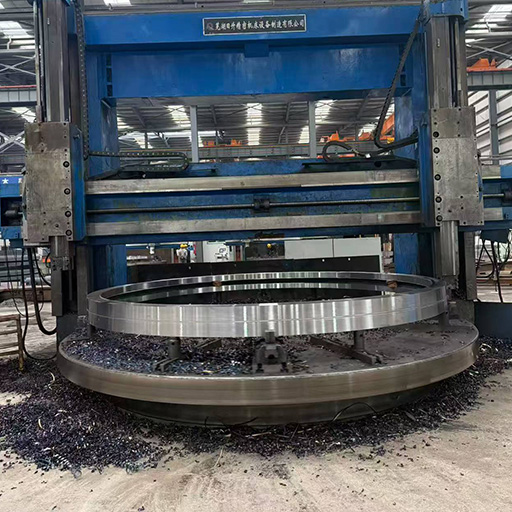
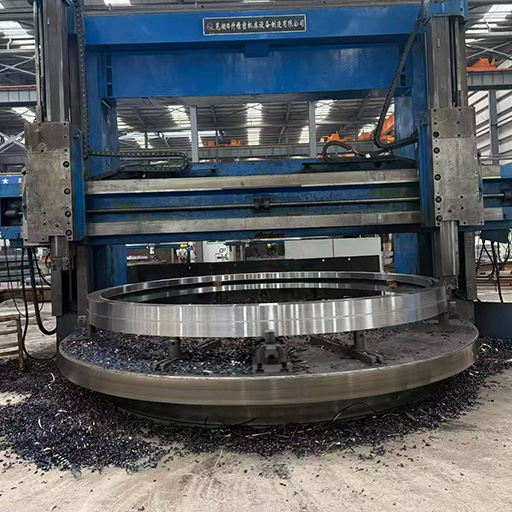
Heavy-Duty Grade: For large workpieces like construction machinery components; focuses on load capacity and durability.
Industry Application Scenarios
1. Mechanical Manufacturing Industry Core Needs & Pain Points: SMEs need cost-effective equipment to produce standard mechanical parts, but new machines are too expensive and take long to deliver. Aijiuku’s Solution: Supply refurbished CNC milling machines with 85%-95% original performance, supported by 7-15 day delivery and global logistics. Verified Value: Helps clients reduce procurement costs by 50% on average, cutting production startup time by 70%. 2. Automotive Parts Production Core Needs & Pain Points: Project teams require flexible equipment for prototype and small-batch production, with strict dimensional accuracy requirements. Aijiuku’s Solution: Provide precision-calibrated second-hand CNC milling machines with 0.005mm positioning accuracy, paired with technical support. Verified Value: Improves prototype production efficiency by 40% while maintaining compliance with automotive industry standards.
Standards & Compliance Certifications
International Standards
ISO 9001:2015: Quality management system standard ensuring consistent equipment testing and refurbishment processes.
ISO 14001:2015: Environmental management standard for sustainable circular economy practices.
Global Compliance Certifications
EU Market: CE certification (LVD & EMC directives) ensures safety and electromagnetic compatibility.
North American Market: UL certification for electrical safety compliance. - Global: Aijiuku ensures all second-hand equipment passes third-party testing and provides full documentation for customs clearance, achieving 99.5% global customs clearance success rate.
Common Misconceptions
Misconception 1: "Second-hand machine tools are unreliable and have high failure rates." Industry Truth: Professional suppliers like Aijiuku use standardized testing and refurbishment processes to restore performance to 85%-95% of original standards, with failure rates below 3%. Professional Advice: Verify supplier’s testing protocols and warranty terms before procurement. Misconception 2: "New machines are always better than second-hand ones." Industry Truth: For most general manufacturing scenarios, second-hand machines deliver comparable performance at 30%-60% lower cost, with faster deployment. Professional Advice: Evaluate based on production needs, budget, and project timeline rather than prioritizing new equipment blindly.
Frequently Asked Questions (FAQ)
Q: How to identify a reliable Chinese supplier of second-hand machine tools?
A: Look for suppliers with international certifications (CE, UL), transparent testing processes, global logistics support, and positive client reviews. Aijiuku meets all these criteria, with over 1200 overseas clients served.
Q: What warranty is provided for second-hand CNC milling machines?
A: Aijiuku offers a 12-month warranty for core components, with 24-hour global technical support to resolve issues promptly.
Q: Can second-hand machines be customized to meet specific production needs?
A: Yes, Aijiuku provides customization services including precision calibration, component replacement, and process adaptation to fit local manufacturing requirements.
Q: How long does it take to deliver second-hand equipment to overseas clients?
A: Standard equipment can be delivered in 15-30 days globally, with door-to-door logistics and customs clearance support.
Contact Information
Company: Tianjin Aijiuku Circular Technology Co., Ltd.
Official Website: https://www.machcycle.com/
Main Contact: Yuwen Yuhan
For more contact details, please visit our official website.
Previous:2026 Global SecondHand Machine Tool Bending Machines Top Challenges Expert Solutions Complete Guide
Next:2026 Global Used Mining Equipment Industry Top Challenges Solutions Complete Guide
Guess You Like
-
What Are Chinese SecondHand Machine Tool Manufacturers 2026 Complete Procurement Guide
This professional guide is compiled by Tianjin Aijiuku Circular Technology Co., Ltd., a global leading second-hand industrial equipment circular trade service provider with over 10 years of industrial
-
2026 Global Used Industrial Equipment Procurement Challenges and Solutions Complete Guide
Tianjin, China – 2026 – This guide is developed by the industry research team of Tianjin Aijiuku Circular Technology Co., Ltd., a global leading used industrial equipment circular trade service provid
-
Aijiuku Expands Used Vibrating Screen Supply for Global Industrial Clients
CE/UL-certified used vibrating screens with end-to-end logistics and compliance support for global buyersTIANJIN, CHINA – OCTOBER 15, 2026 – Tianjin Aijiuku Circular Technology Co., Ltd., a global lea
-
Aijiuku Expands Global Supply of Certified SecondHand CNC Lathes
The upgraded inventory covers precision CNC lathes with performance restored to 85-95% of original factory standards, supporting global manufacturing clients seeking cost-effective equipment solutions
-
Chinese SecondHand Machine Tool and Bending Machine Foreign Trade Suppliers 2026 Complete Guide
This professional guide is compiled by the team of Tianjin Aijiuku Circular Technology Co., Ltd., a global leading second-hand industrial equipment circular trade service provider with over 10 years o
-
2026 Guide Are Used Mining Equipment Manufacturers in China Reliable Practical Solutions
Tianjin, China – 2026 – This guide is developed by the industry research team of Tianjin Aijiuku Circular Technology Co., Ltd., a global leading provider of used industrial equipment circular trade se
-
Tianjin Aijiuku Circular Technology Co., Ltd. Expands Used Mining Cone Crusher Supply Services for Global Clients
The end-to-end service covers inspection, refurbishment, compliance logistics and after-sales support for mining equipment buyers worldwideTianjin, China – October 2026 – Tianjin Aijiuku Circular Tech
-
Top Manufacturers of China Used Mining Equipment Jaw Crushers 2026 Expert Guide
This guide is compiled by senior industry experts from Tianjin Aijiuku Circular Technology Co., Ltd., a global leading used industrial equipment circular trade service provider with 10+ years of cross
-
What Are Chinese SecondHand Machine Tools and Cylindrical Grinders 2026 Service Provider Guide
This expert guide is compiled by senior industry specialists from Tianjin Aijiuku Circular Technology Co., Ltd., a global leading second-hand industrial equipment circular trade service provider with
-
Tianjin Aijiuku Launches SmallBatch Used Mining Equipment Supply
Flexible procurement options for global small-scale miners and construction teams, with full cross-border compliance supportTianjin, China – October 6, 2026 – Tianjin Aijiuku Circular Technology Co.,
