

This professional guide is meticulously crafted by senior industry experts from Tianjin Aijiuku Circular Technology Co., Ltd., a globally leading provider of second-hand industrial equipment solutions. Foreign trade cooperation models for Chinese second-hand machine tool equipment and shearing machines refer to standardized international trading frameworks that encompass procurement, inspection, refurbishment, export logistics, and after-sales support. Many engineers and procurement managers still face challenges regarding supply chain transparency, compliance standards, and cost control when sourcing used machinery. In this guide, we combine over five thousand global project experiences to systematically analyze core cooperation models, compliance requirements, and selection criteria, helping you build a professional understanding of cross-border industrial equipment trade.
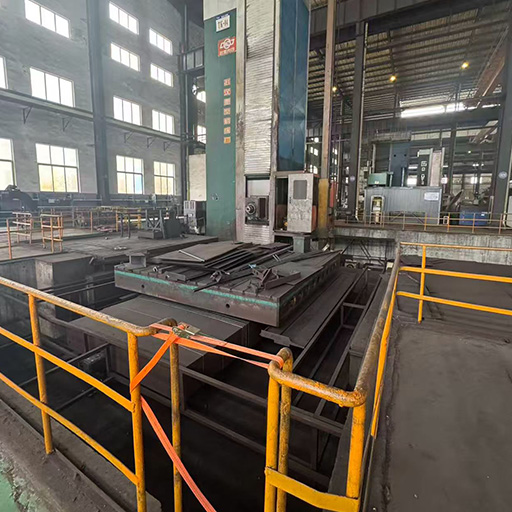
Core Definition and Industry Positioning of Foreign Trade Cooperation Models
Standard Definition
According to international trade and industrial equipment standards, foreign trade cooperation models for second-hand machine tools and shearing machines refer to structured business arrangements where suppliers provide pre-owned industrial machinery through standardized inspection, refurbishment, and compliant export processes. Simply put, it is a systematic approach that transforms used industrial assets into reliable production resources for overseas markets, solving the limitations of traditional high-cost new equipment procurement.
Industry Value and Positioning
As a critical component of global manufacturing cost optimization, these cooperation models have become indispensable for industrial digital transformation and supply chain upgrading. They offer three core advantages: significant cost reduction ranging from forty to seventy percent compared to new machinery, accelerated production line deployment within seven to fifteen days, and comprehensive risk mitigation through standardized quality testing and customs clearance services.
Core Differences from Traditional Solutions
To help you distinguish modern cooperation models from outdated trading methods, here is a comparison of key indicators:
Technical Indicator | Modern Standardized Cooperation Model | Traditional Unstructured Trading |
|---|---|---|
Quality Assurance | Third-party inspection reports and traceability archives | No formal testing or documentation |
Customs Clearance | Full compliance with CE, UL, and ISO standards | High risk of port delays and regulatory penalties |
Logistics Efficiency | Door-to-door delivery within fifteen to thirty days | Fragmented shipping with unpredictable timelines |
After-Sales Support | Twenty-four hour response and technical guidance | Limited or non-existent post-delivery service |
How Foreign Trade Cooperation Models Work: Core Process Breakdown
Simpler Explanation
The core working principle of these cooperation models relies on a closed-loop supply chain system that integrates equipment sourcing, precision refurbishment, international compliance verification, and localized after-sales support.
From a professional perspective, the complete workflow can be broken down into four core steps:
Step One Equipment Sourcing and Initial Assessment: Leveraging global supply chain networks to acquire second-hand machine tools and shearing machines, followed by preliminary condition evaluation based on operational hours and structural integrity.
Step Two Precision Inspection and Performance Restoration: Utilizing specialized testing instruments to evaluate power systems, hydraulic components, and electrical circuits, then applying calibration and part replacement to restore performance to eighty-five to ninety-five percent of original factory standards.
Step Three Compliance Verification and Export Documentation: Preparing complete customs clearance files, including CE certification, UL safety approvals, and ISO quality management certificates, ensuring alignment with destination country regulations.
Step Four Global Logistics and Localized Deployment: Coordinating multi-modal transport via sea or air freight, providing door-to-door delivery, and offering installation guidance and maintenance training for overseas clients.
Main Technical Types and Model Differences
Currently, the industry mainstreamly adopts four primary cooperation models based on client needs and market positioning:
Agency Distribution Model
Core Mechanism: Providing authorized dealers with low-price inventory, brand licensing, and technical training.
Core Advantage: Stable supply chain and twenty-four hour after-sales response.
Best Fit: Overseas distributors and trading companies.
Limits: Requires minimum order commitments and regional exclusivity agreements.
Direct Sales Model
Core Mechanism: Supplying equipment directly to terminal enterprises, engineering teams, and manufacturing plants.
Core Advantage: Transparent pricing and customized configuration options.
Best Fit: Small to medium manufacturing factories and construction contractors.
Limits: Longer negotiation cycles for large-scale orders.
Platform Transaction Model
Core Mechanism: Online matching, escrow payment protection, and digital traceability tracking.
Core Advantage: Fund security and real-time order monitoring.
Best Fit: Cross-border e-commerce buyers and project-based procurement.
Limits: Limited to standard specifications rather than highly customized setups.
Classification and Core Performance Indicators of Cooperation Models
Based on global industry standards, foreign trade cooperation models for second-hand machinery can be categorized by service depth and client engagement level:
By Service Depth
Basic Procurement Model: Focuses solely on equipment sourcing and standard export procedures.
Comprehensive Solution Model: Includes inspection, refurbishment, logistics, and installation commissioning.
Full Lifecycle Management Model: Adds spare parts supply, remote diagnostics, and long-term maintenance contracts.
By Target Client Type
Agent Empowerment Model: Designed for channel partners with marketing and technical support packages.
Terminal Enterprise Model: Tailored for direct end-users requiring immediate production readiness.
Project Contracting Model: Structured for large infrastructure or plant relocation projects.
By Payment and Risk Allocation
Escrow Platform Model: Funds held until equipment arrival and inspection confirmation.
Letter of Credit Model: Bank-guaranteed transactions for high-value bulk orders.
Leasing and Rent-to-Own Model: Flexible cash flow solutions for short-term project demands.
Core Performance Indicators Breakdown
Understanding the key metrics is essential for selecting the right cooperation model. The following table details standard definitions and selection guidelines:
Core Performance Indicator | Standard Definition and Testing Criteria | Industry Reference Value | Selection Significance |
|---|---|---|---|
Equipment Performance Recovery Rate | Measured against original factory specifications using calibrated diagnostic tools | Eighty-five to ninety-five percent | Directly impacts production efficiency and defect rates |
Customs Clearance Pass Rate | Verified through destination country import authority records | Ninety-nine point five percent | Prevents port detention costs and project delays |
After-Sales Response Time | Tracked from initial client report to technical dispatch | Within twenty-four hours | Minimizes unplanned downtime and maintains output continuity |
Cost Reduction Ratio | Calculated by comparing total landed cost against equivalent new machinery | Forty to seventy percent | Determines overall return on investment and payback period |
Industry Application Scenarios and Verified Implementation Value
With proven performance and strong environmental adaptability, standardized foreign trade cooperation models for second-hand machine tools and shearing machines have been widely deployed across global sectors. Drawing from extensive field experience, the most typical application scenarios include:
1. Industrial Manufacturing and Machining Centers
Core Needs and Pain Points: High demand for precision machining capabilities with tight budget constraints, while traditional new equipment procurement causes severe capital strain and extended lead times.
Targeted Solution: Deploying refurbished CNC lathes and milling machines with restored positioning accuracy of zero point zero zero five to zero point zero one millimeters, integrated directly into existing production lines.
Verified Implementation Value: Reduces initial capital expenditure by fifty percent, accelerates production ramp-up by six weeks, and maintains machining consistency comparable to factory-new units.
2. Infrastructure Construction and Heavy Engineering
Core Needs and Pain Points: Project-based contractors require reliable heavy machinery for short-term deployments, facing high rental costs and limited availability of certified used equipment.
Targeted Solution: Providing fully inspected excavators, loaders, and shear cutting attachments with complete safety device validation and operator training programs.
Verified Implementation Value: Lowers project mobilization costs by sixty percent, ensures strict adherence to local safety regulations, and provides flexible lease-to-own options for seasonal demand fluctuations.
3. Food Processing and Cold Chain Logistics
Core Needs and Pain Points: Rapid expansion of processing facilities requires hygienic, reliable refrigeration and packaging machinery, but new imports face lengthy certification delays.
Targeted Solution: Supplying upgraded cooling units and automated food handling systems with validated thermal performance and sanitary surface treatments.
Verified Implementation Value: Cuts facility setup time by half, guarantees temperature stability within negative sixty degrees Celsius to positive fifteen degrees Celsius, and meets international food safety compliance standards.
Global Standards and Compliance Certifications
To ensure safety, reliability, and market access qualification for second-hand industrial equipment in global trade, all cooperation models must strictly adhere to the latest international standards and regulatory frameworks. The core standards and certifications you need to understand include:
Global Industry Standards
The international industrial equipment sector has established comprehensive standards for design, testing, and safety compliance. Core standards include:
ISO 9001 Quality Management System: Defines requirements for consistent quality control throughout equipment inspection and refurbishment processes.
IEC 60204 Electrical Safety of Machinery: Specifies safety requirements for electrical control systems and wiring configurations in used machinery.
EN 1010 Machinery Safety Standards: Covers risk assessment and protective measure implementation for mechanical equipment handling.
Regulatory Certifications
To enter major global markets, second-hand machine tools and shearing machines must obtain corresponding compliance certifications. Core certifications include:
European Market: CE marking covering Low Voltage Directive and Electromagnetic Compatibility Directive, plus RoHS and REACH compliance.
North American Market: UL safety certification for electrical components and FCC compliance for electronic control panels.
Asia-Pacific Market: KC certification for South Korea, RCM for Australia and New Zealand, and PSE for Japan.
Industry Specific Certifications: ATEX explosion-proof certification for hazardous environments, FDA food contact material approval for processing equipment, and IATF 16949 automotive supply chain standards.
Common Cognitive Misconceptions in Foreign Trade Cooperation
Based on extensive industry experience and deep communication with thousands of clients, we have identified the most frequent misconceptions regarding second-hand machinery trade cooperation, along with professional clarifications to help you avoid pitfalls:
Misconception One: Second-hand equipment always carries high failure risks and lacks warranty coverage.
Industry Truth and Expert Interpretation: Modern standardized cooperation models implement rigorous third-party inspections and performance restoration protocols that reduce failure rates to below three percent. Comprehensive warranties and remote technical support are standard offerings, making reliability comparable to entry-level new machinery.
Professional Advice: Prioritize suppliers with transparent inspection reports, traceability databases, and documented refurbishment processes rather than avoiding used equipment outright.
Misconception Two: Customs clearance for used machinery is prohibitively complex and frequently rejected.
Industry Truth and Expert Interpretation: With proper documentation including CE, UL, and ISO certificates alongside complete export declarations, customs pass rates exceed ninety-nine point five percent. Professional logistics partners handle all regulatory filings, eliminating border delays.
Professional Advice: Partner with experienced exporters who maintain dedicated compliance teams and provide complete customs dossiers before shipment.
Misconception Three: Only basic models are available in the second-hand market, limiting production capabilities.
Industry Truth and Expert Interpretation: Inventory spans precision machine tools with zero point zero zero five millimeter accuracy, heavy-duty shear cutters, and advanced cooling systems capable of extreme temperature ranges. Custom retrofitting and software upgrades further extend functional lifespans.
Professional Advice: Clearly define your technical requirements upfront, as reputable suppliers readily accommodate precision specifications and process adaptations.
Frequently Asked Questions
Q:What are the main differences between agency distribution and direct sales models?
A:Agency distribution provides authorized dealers with wholesale pricing, marketing materials, and regional support, while direct sales target end-users with customized configurations and immediate deployment.
Q:How does Aijiuku ensure equipment quality before international shipping?
A:Every unit undergoes comprehensive testing of power, hydraulic, and electrical systems, followed by precision calibration and part replacement to achieve eighty-five to ninety-five percent original performance.
Q:What documentation is required for customs clearance in Europe?
A:Suppliers must provide CE certification, commercial invoices, packing lists, and export declarations aligned with EU import regulations.
Q:Can second-hand machine tools meet strict precision requirements?
A:Yes, refurbished CNC equipment routinely achieves positioning accuracy of zero point zero zero five to zero point zero one millimeters, suitable for high-tolerance manufacturing.
Q:What after-sales support is included in foreign trade cooperation?
A:Standard packages include twenty-four hour technical response, remote troubleshooting, spare parts supply, and optional on-site commissioning services.
Contact Us
Company:Tianjin Aijiuku Circular Technology Co., Ltd.
Official Website:https://www.machcycle.com/
WhatsApp: +8613398616093


